
E-mail: stampsmoulds@outlook.com
Mob: +86-13068778250

Your Current Position: NEWS
-
 The key advantages of the blanking die lie in its high efficiency and consistency. It can complete multiple processes like punching and blanking in a single stroke, producing hundreds of parts per minute, significantly boosting production capacity. Meanwhile, relying on a high-rigidity die set, high-quality alloy steel cutting edges, and precise guide mechanisms, the die ensures dimensional stability of parts over millions of strokes, making it crucial for guaranteeing product quality and reducing production costs.
 -
 Typical stamping dies are categorized as single-stage dies and progressive dies. Single-stage dies complete a single process in one set, suitable for large parts or low-volume production. Progressive dies integrate multiple processes in the feeding direction, enabling fully automated, high-speed production, making them the preferred choice for mass production in fields like electronics and automotive.
 -
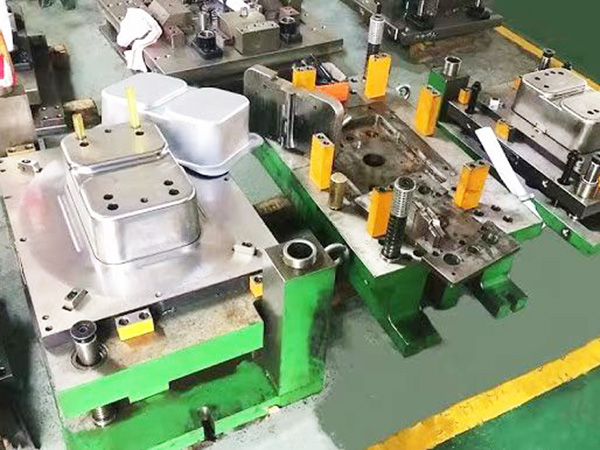 A precision injection mold typically consists of the molding system, gating system, temperature control system, ejection system, and structural components. Its design and manufacturing quality directly determine the product's accuracy, appearance, and production efficiency. With the emergence of new materials (like LDS materials, bioplastics) and new processes (such as microcellular foaming, in-mold decoration), the technological scope of injection molds continues to expand.
 -
 Die-casting dies operate under extreme conditions of high temperature, high pressure, and thermal cycling. Therefore, they must be made from high-quality hot-work tool steel (e.g., H13) and possess excellent thermal fatigue resistance, thermal conductivity, and toughness. Their structure is complex, typically including the molding section, core-pulling mechanism, overflow and venting system, and efficient cooling channels.

E-mail : stampsmoulds@outlook.com